

So, what exactly is a memory foam mattress? At its core, it’s a mattress made from a material called viscoelastic foam. This material reacts to pressure, allowing it to contour around your body’s shape. That close contouring is what gives memory foam its well-known pressure-relieving feel.
Memory foam mattresses have become popular because they can offer a more personalized sleep surface than many traditional mattress designs. Memory foam mattresses are especially known for reducing pressure points and limiting motion transfer, which is one reason many couples and side sleepers consider them.
Where Memory Foam Came From
Viscoelastic foam was originally developed in the 1960s for use in aerospace applications, where researchers were looking for materials that could better absorb pressure and improve cushioning during high g-force maneuvers. Over time, that technology developed for rockets and astronauts was adapted for consumer products — especially mattresses.
Since becoming more widely available in the 1990s and 2000s thanks to pioneering brands like Tempur-Pedic, viscoelastic foam mattresses have grown in popularity with shoppers looking for pressure relief, motion isolation, and a more contouring feel than a traditional innerspring mattress.
How Does Memory Foam Work?
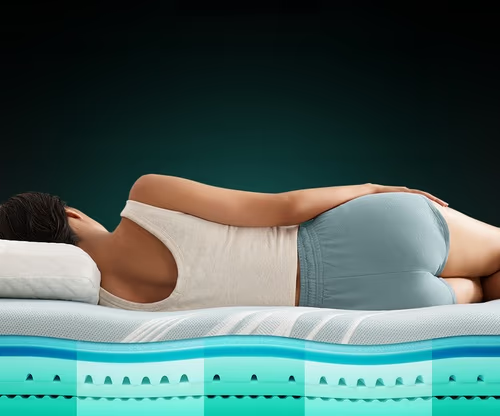
Memory foam responds to pressure by compressing precisely where weight is applied — and nowhere else. This allows memory foam mattresses to contour more closely around areas like the shoulders, hips, and lower back. That contouring helps spread body weight more evenly across the mattress surface. For many sleepers, that can reduce pressure buildup and create a more cushioned, body-conforming feel.
Memory foam also absorbs movement better than many spring-based mattresses. Instead of transferring motion across the bed, the foam helps contain the movement in one area. That is one reason memory foam is often appealing to couples or light sleepers who do not want to feel every movement from the other side of the bed.
What Does Memory Foam Feel Like?
Memory foam usually has a closer, more contouring feel than an innerspring mattress. Some people describe it as a gentle “hug,” while others simply notice that it molds more closely to the body.
That feel can be a great fit for sleepers who want pressure relief and less motion transfer. Similarly, memory foam is often preferred by side sleepers who naturally require a bit more contouring to support the spine. At the same time, not everyone prefers that kind of surface. Some shoppers prefer a mattress with more bounce, faster response, or a more lifted-on-top feel.
Core Benefits of Memory Foam
Once you understand where memory foam came from, how it works, and what it feels like, it’s not hard to see why memory foam mattresses have grown in popularity significantly since their introduction in the 1990s and 2000s.
Conforming Comfort: A key feature that draws shoppers to memory foam mattresses is their enveloping, cloud-like, cushioning comfort.
Excellent Pressure Relief: By conforming so closely to your body, memory foam helps eliminate painful pressure points in the hips and shoulders. This can be a significant benefit for side sleepers and may lead to less tossing and turning.
Motion Isolation: Viscoelastic foam is brilliant at absorbing energy. If you share a bed with a restless partner (or a pet that jumps on and off all night), you’re far less likely to feel their movements.
This unique combination of contouring support and motion absorption is why memory foam has become a preferred solution for many sleepers looking to minimize disturbances and alleviate discomfort. It provides a quiet, still, and deeply supportive sleep environment. In the end, it’s all about creating personalized comfort that adapts to you, not the other way around.
Common Types of Memory Foams Found in Mattress Construction
However, please keep in mind that not every memory foam mattress feels exactly the same. Different varieties of viscoelastic foams and methods of foam mattress construction can change how the mattress feels.
Traditional Memory Foam
Traditional memory foam is known for its slower response and deeper contouring feel. It is often the version people think of when they picture memory foam closely molding around the body. This type can work well for pressure relief and motion isolation.
Gel Memory Foam
Gel memory foam includes gel added to the foam to help manage heat. Different manufacturers use different approaches (gel-infused, copper-infused, etc.), but the goal is usually to help the mattress sleep cooler than older, more traditional memory foam designs. Many shoppers consider gel memory foam when they want the feel of memory foam with added cooling features.
Open-Cell Memory Foam
While technically all memory foam has an open-cell structure, newer versions feature much larger, more interconnected cells. Imagine the difference between a dense pound cake and a light, airy sponge cake. The sponge's more open structure lets air pass through it easily. Similarly, open-cell memory foam is designed to allow more airflow through the material. This can help reduce heat retention and create a more responsive feel, depending on the mattress design.
Tempur Material
While technically not memory foam, Tempur-Pedic’s proprietary Tempur material is indeed a type of viscoelastic foam that adapts to pressure, as well as the sleeper's shape and body heat. For those interested in learning the difference between memory foam and Tempur material, don't miss our linked guide.
Pros and Cons of Memory Foam Mattresses
Like any mattress type, memory foam has strengths and trade-offs. Whether it is a good fit depends on what feels comfortable to you and what problems you are trying to solve.
Key Benefits of Memory Foam Mattresses
Memory foam mattresses are often a good fit for shoppers who want:
- strong pressure relief around the shoulders, hips, and back
- reduced motion transfer for couples
- a more contouring, body-conforming feel
- a quieter mattress surface without the bounce of coils
- near universal compatibility with adjustable beds / adjustable bases
- the convenience offered by a shippable, mattress-in-a-box, depending on mattress design
Potential Drawbacks of Memory Foam Mattresses
Memory foam may be less appealing for shoppers who:
- prefer a more responsive or springy feel
- dislike the sensation of sinking in or being closely cradled
- desire substantial edge support along the mattress edges
- are especially concerned about heat retention, depending on the mattress design
- want to compare foam more directly against hybrid or innerspring models before deciding
Is a Memory Foam Mattress Right for You?
Memory foam can be a good option for many sleepers, especially those who want pressure relief and better motion isolation. It is often strongly considered by side sleepers and couples, though personal comfort, firmness preference, and body type all play a big role in what feels best. Ultimately, the best way to know whether memory foam is right for you is to compare it with other mattress types and pay attention to how each one feels to your body.
If sleep position is one of the main factors in your decision, we’d recommend reading The 3 Sleeping Positions & Choosing the Mattress That's Best for You.
Meanwhile, if sleeping temperature remains a major concern for you and you’re unsure whether a foam mattress will sleep too hot for you, don’t miss Mattress Mythbusters: Does Memory Foam Get Hot?
Finally, for those still undecided on which type of mattress construction is right for you, be sure to read our guide to mattress types — Innerspring vs Hybrid vs Foam Mattress: Understanding the 3 Key Types of Mattresses.
Let Us Help You Compare Your Mattress Options!
A memory foam mattress is designed to respond to pressure and the shape of the sleeper, contouring more closely to the body than many traditional mattresses. For many shoppers, that can mean better pressure relief, less motion transfer, and a more personalized feel. That said, memory foam is not the right fit for everyone. Some sleepers love the close contouring feel, while others prefer a mattress with more bounce or a cooler, more responsive surface.
If you have more questions and are comparing your options, our team at Woodstock Furniture & Mattress Outlet is at your service. We can help you talk through the differences in-store at one of our Atlanta area or North Georgia furniture and mattress locations or on our convenient live webchat so you can find the mattress type, brand and model that fits you best. See you soon!